
1-877-861-8000
Mon-Fri, 9 AM-6 PM PT
A home exercise program usually needs only a few items: resistance bands or tubing to pull against, hand balls or putty to squeeze, a pedal exerciser to use from a seat, and cuff weights or dumbbells to add weight. Bring your clinician's exercise list when you shop and confirm resistance and weight levels with them first.

Key takeaways
A home exercise program usually needs only a few pieces of equipment: something to pull against, something to squeeze or hold, something to pedal and something to add weight. This guide explains how resistance bands, balls, pedal exercisers and weights differ, what to compare on each product page and how to set up a small space at home.
We sell equipment, not medical advice. If a physical therapist or other clinician gave you an exercise program, bring the list when you shop, and talk to your clinician about the resistance level, the weight and how often to use each item before you start.
Bands are flat strips of elastic, and tubing is the round version, often with handles. Both are light and easy to store or pack, which makes them a common first purchase for a home program. Resistance is usually shown by color, with each color a step up or down from the next. Color scales are set by each brand, so a red band from one maker is not always the same as a red band from another.
Cando Exercise Bands are 5 inches wide and can be cut to whatever length you need, then used as a strip or tied into a loop. They also work with band and tubing accessories. Cando's AccuForce bands go a step further, with indicators on the band that change shape at four stretch levels so you can repeat the same stretch each time.
Tips for bands:
"Ball" covers two very different products. Large inflatable exercise balls are used for seated and floor exercises. The Thera-Band Exercise Ball inflates with a hand or foot pump and comes with a poster showing 24 exercises. Exercise balls are made in different diameters, and this listing does not name one, so call us to confirm the size before you order and ask your clinician which size suits your height and program.
Small hand balls and putty are for grip and finger work. The Cando Gel Hand Exercise Ball is a large cylinder of gel that can be warmed or chilled before use. Theraputty comes in color-coded consistencies, and Cando's Handy Easy Grip Ball is a textured hand weight with an adjustable strap for people who find dumbbells hard to hold.
A pedal exerciser is a small, frame-mounted set of pedals that you use from a seat. Set the unit down ahead of a chair for foot pedaling, or move it to a table and turn the pedals by hand. Look at three things: how steady the frame is, how the tension adjusts and how the feet are held on the pedals.
The Cando Leg and Arm Exerciser has widely spread legs with rubber feet that will not mark floors, adjustable wrap-around footstraps that work with or without shoes, and a knob for setting the tension. Our basic Exercise Pedal also has adjustable tension and rubber tips, and it needs some assembly. For use from a bed or wheelchair, the Cando Chair Cycle lists a resistance range of 0 to 29 lbs.
Use a sturdy chair without wheels, or lock the brakes on a wheelchair, and check that the pedals are within easy reach before you start.
Cuff weights strap around the ankle or wrist, which leaves the hands free. The Cando EconoCuff is made of coated nylon, shapes itself to the ankle, wrist or thigh, and has a long hook-and-loop strap for setting the fit. Our Rehab Ankle and Wrist Weight is vinyl with a foam backing, closes with an 18 to 22 inch strap and is sold one at a time in color-coded weights.
Dumbbells are held in the hand and are often used for arm work. Our vinyl-coated cast-iron dumbbells are color-coded and sold singly or in pairs. Start with the weight your clinician suggests and move up only when your program says so.
A mat gives a cleaner, softer surface for floor exercises. The Cando Exercise Mat is waterproof closed-cell foam and rolls up to 24 by 8 inches. For balance work, the Cando Modular Stability Trainer pairs a disc with a non-slip board. Keep a counter or a sturdy chair within reach whenever you practice balance exercises.
| Equipment | How it is used | Check on the listing |
|---|---|---|
| Resistance bands and tubing | Flat strips or round tubing, often with handles, that you pull against | The brand's color scale, width and length |
| Exercise ball | Large inflatable ball for seated and floor exercises | Diameter; call us if it is not listed |
| Hand balls and putty | Squeezed for grip and finger work | Consistency or size |
| Pedal exerciser | Small pedal frame used from a seat, with the feet or the hands | Frame steadiness, tension adjustment and foot straps |
| Cuff weights | Strap around the ankle or wrist, leaving the hands free | Weight and strap length |
| Dumbbells | Held in the hand, often for arm work | Weight, and whether sold singly or in pairs |
Use the weight and resistance your clinician suggests, and move up only when your program says so.
Have a question about one of these products? Call 1-877-861-8000, Monday to Friday, 9 AM to 6 PM Pacific, or email contactus@medsupplynow.com. Shipping is free within the US on orders of $50 or more. Browse our fitness and rehab collection, our fitness equipment and our rehab equipment.
You may also find these useful: choosing a knee or back brace and positioning pillows, wedges and cushions. For every topic we cover, see the buyer's guide hub.
Each color stands for a resistance level, and you step up one color at a time. Every brand sets its own color scale, so compare levels within the same brand rather than across brands.
Cando Exercise Bands can be cut to the length you need and used as a strip or tied into a loop. Check the listing for other bands, since tubing with handles is made to a fixed length.
Exercise balls come in different diameters. Ask your clinician which size suits your height and your exercises, and call us to confirm the size of a ball before you order.
Many can. Put it on the floor ahead of a chair for leg work, or on a table for arm work. The Cando Leg and Arm Exerciser and our Exercise Pedal are both listed for arm or leg use.
Start with the weight your clinician or exercise program suggests. Cuff weights are sold in color-coded weights, often one at a time, so you can add more as your program changes.
We sell bands by the box, and we carry a replacement band kit for the Resistance Gym. Call 1-877-861-8000 if you need help matching a band to your equipment.
 November 11, 2026
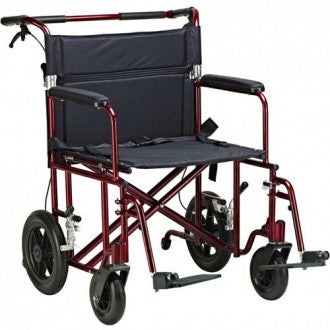
Bariatric Equipment Buyer's Guide: Lifts, Beds, Wheelchairs and Bathroom Aids
What to compare on bariatric lifts, beds, mattresses, wheelchairs, transport chairs, walkers and commodes, with capacities from the makers we...
 November 11, 2026
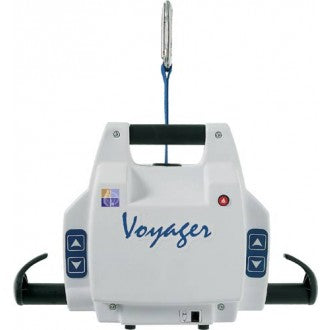
Ceiling Lifts vs. Floor Lifts: How to Choose a Ceiling or Track Lift
How ceiling lifts and floor lifts differ, the track options that need no ceiling work, and how the Voyager, Maxi...
 November 11, 2026
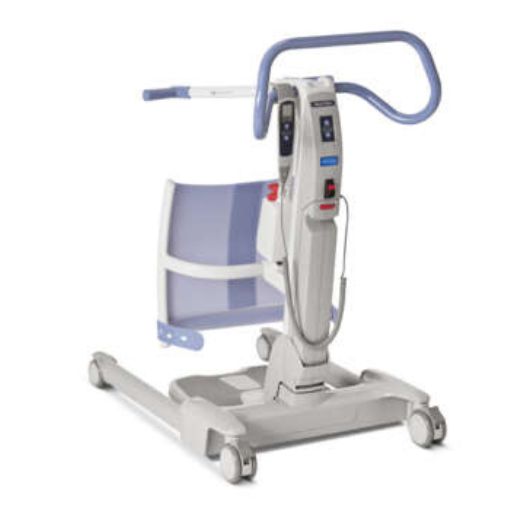
Sit-to-Stand Lifts: How to Choose a Stand Aid or Powered Stand Lift
How manual stand aids and powered sit-to-stand lifts differ, who they are meant for, and how the Arjo Sara, Hoyer...